.

Saturday, 12 March 2011

My Name is Red

"I am the only historical novelist in the world who can point out his subjects with his finger." Orhan Pamuk

This is the first book I have read by Nobel Prize winner Orhan Pamuk. It won't be the last. This is a wonderful feast of ideas, on one level a historical murder mystery set in the sixteenth / seventeenth century but on another an exploration of art and artistry, of the interplay between images and psychology, the sweep of history and the way Istanbul is at the nexus of  Christian and Moslem worldviews.

A central theme of the novel is perspective. The miniatures are painted from the specultive perspective of Allah. There is a growing awareness of Venetian painting and the increasing realism of Western painting and their use of different perspectives. A preacher rails against this 'blasphemy' and this stirs up trouble amongst the miniaturists who are working on a book of illustrations using elements of the western 'style'.

Monday, 7 March 2011

Camus' Plague - A Cruel Mirror

Unlike Defoe's Journal of the Plague Year, (one of my favourite books -showing , perhaps, an unhealthy interest in the darker side of human experience) Camus is not trying to build a socio-realist vision of a visitation of the Bubonic Plague. That is not to say that there is not much that is compellingly realistic in this book.

Rather he is using the plague both as an allegory for the Nazi reign in France and as a cruel mirror in which we may see how philosophies for living hold up in the most testing of circumstances. Like pressing mercury on tin to make a mirror, Camus presses the plague bacillus onto thin veneers of meaning and looks at our reflections there.

We have scientific, religious, romantic and variations therof, embodied in diferent characters who all find their beliefs sorely tested. We even have a Harry Lime type who revels in The Plague as it gives him respite from the law and many opportunities to make a killing.

Saturday, 5 March 2011

Never Let Me Go

Right from the start of this book we know that we are only getting part of the picture. We know there's something happening but we don't know what it is. Carers, donors, privileged estates, Hailsham....

When we go back into our narrator's past, we find Hailsham to be a boarding school, or something very like one. The casual cruelty of children, being 'in' with the right people, the cult of particular teachers, the importance of particular belongings, rules...

"... how we each had our own collection chests under our beds, the football, the rounders, the little path that took you all round the outside of the main house, round all its nooks and crannies, the duck pond, the food, the view from the Art Room over the fields on a foggy morning."

Thursday, 3 March 2011

All the King's Men

This is a book full of  the putrid vitality of politics and much else besides. The book is narrated by Jack Burden, a journalist who becomes the right hand man to rising political force Willie Stark (The Boss). He wrestles with the meaning of his life and the ethics of wielding power. We jump backwards and forwards in time as he tries to understand what the past has meant to him and how to divest himself of its burden.

The effort to understand is often blunt and so are many of the voices and personalities that fill the book. Some of the politics had a resonance with the General Election raging around me here in Ireland as I read. I could imagine some candidates having very similar conversations to this one between Stark and Burden.

"They didn't seem to be paying attention much tonight. Not while I was trying to explain about my tax program."
"Maybe you try to tell 'em too much. It breaks down their brain cells."
"Looks like they'd want to hear about taxes, though," he said.
"You tell 'em too much. Just tell 'em you're gonna soak the fat boys, and forget the rest of the tax stuff."

Friday, 25 February 2011

What We Leave in Our Wake

People who know me would not think it strange for me to say that I am (at best) somewhat bemused by life.  The shape and values of the tide of life often seem in permanent ebb and most of our culture is like driftwood, smoothed and blunted by saltwater and sand.


What We Leave In Our Wake (trailer 21st) from Harvest Films on Vimeo.

It is invigorating to see an Irish film taking up Joyce's great challenge to ' forge in the smithy of my soul the uncreated conscience of my race.' Pat Collins has made an important  film whose contribution to the Irish may be greater than anything arising out of tomorrows 'most important election in our lifetime'. It has certainly stirred thoughts in my mind and I will be taking advantage of it's presence on the RTE Player to watch it again before it disappears. (It's there until Monday 14th March)

He shows us an Ireland of garage forecourts and stone walls, of nondescript urban landscapes whose inanity is a challenge to identity. The land gives back remnants of our past like a Connemara navvy spitting his bloody teeth on a Kilburn sidewalk, his very language already stolen from his mouth.

Thursday, 24 February 2011

Still Wearing Blue Shirts?

General Eoin O'Duffy

Leo Varadkar


Separated at birth but still grooving at the same party?

Saturday, 19 February 2011

Go Ahead Punk, make my day....

Book no. 12 in my quest to read and review 100 Books in 2011

The Sex Pistols shot like a comet presaging doom through the medieval dives of 1976/77. Led by the fiery red heads of John Lydon and Malcolm McLaren they were always destined to crash and burn but their parabola described a future without the truisms of the establishment or even the late sixties anti-establishment.

A few tame words to a partly pickled and provocative chat show host made the Pistols Public Enemy No. 1 and the release of God Save the Queen in the week of H.R.H.'s jubilee made them targets for violence wherever they went.

The Speckled People

This memoir of the childhood of the son of an Irish father and German mother is an impressionist masterpiece. Hamilton's book has a dark core but the stories and descriptions are intensively burnished so that the book is suffused by the light, smells and sounds of childhood. The past is often starkly immediate in these pages. In a similar but less experimental way than Joyce's Portrait of an Artist we are immersed in a child's understanding and this understanding grows as the book progresses.

"When you're small you know nothing."

Sunday, 13 February 2011

What do I stand for? Election, of course.

The state of Irish politics was expressed perfectly when the most successful electoral politician of the modern era stated that his biggest regret was that he didn't get to build a vanity sports stadium in a city already oversupplied with them.

He didn't regret turning the venue for the Community games into a low level prison camp for people whose only crime was wanting to be Irish. He didn't regret that the huge new terminus at Dublin Airport was becoming the launching pad for another generation of Irish emigrants whose children will be slagged off as plastic paddies in some future Ireland of the welcomes. Unless of course they happen to be President of the good ol' US of A. It's not just the politicians who admire power for powers sake.

Wednesday, 9 February 2011

and here it is again, as it was, and always shall be - WIRE

I went to my first gig in a while last Saturday night and saw Wire for the first time approximately 32 years since first hearing them on John Peel. I was chaperoned by my teenage daughter.

Wire, in case you don't know are one of the greatest bands to emerge from the punk era, from the sound of a crowd ignoring them on the Live at the Roxy album through their first three essential albums Pink Flag, Chairs Missing and 154 and on the sound of REM copying them on Document and Elastica basing a career on them to such an extent that they had to pay them royalties. They have reformed and broken up a few times but have always produced interesting and often exceptional work. They are currently touring to support their new, and very strong album Red Barked Tree.

The venue was downstairs in the Academy in Middle Abbey Street, just across the road from where I had one of my first jobs (in the then Curzon Cinema). Ghosts seemed very present. The venue reminded me of venues I had been in or played in. Briefly I felt overcome by a sense of the past. Sometimes I feel the truth in the idea that there is something looking out through our eyes, something not altogether familiar to us. I  felt like I was suddenly looking out through my twenty year old eyes and got a real physical sense of why it was that I wanted to be in a band. I almost felt that way again.

Monday, 7 February 2011

A World Turned Upside Down

Upside Down, a Primer for The Looking-Glass World, by Eduardo Galeano

In a engine, when one gear goes forward, another is pushed back. Galeano opens the bonnet onto the engine of human 'progress'. In it we see those who drive forward with reckless abandon, those pushed back and those who are ground between the gears or fed to the fuel tank.

This is a wise and wonderful work full of the most quotable quotes. Shaped like a school primer and written from a  Latin American center of gravity 'Upside Down' takes us on a funfair ride through consumer culture, asking as he goes if anyone is really served by it.

It is a crime to deny the Holocaust but not to deny the consequences of our own lifestyles and the political hegemony of the powerful.  Despite holding up a mirror to the world and showing us an unflattering picture of what we are this book is full of laughs of recognition, freewheeling language and ideas and myriads of quotable quotes and anecdotes. It is also full of rage.

Sunday, 30 January 2011

The Poisonwood Bible

No novel which finds a white man losing his mind deep in the Congo can quite escape the shadow of Heart of Darkness. It is in the bibliography at the end of this book. Kurtz is echoed in the description of previous resident Brother Fowles who, we are told "had gone plumb crazy, consorting with the inhabitants of the land."

However it is not by 'going native' that Baptist missionary Nathan Price loses his mind but by the refusal to do so. Rachel, Leah, Adah and Ruth May - his four daughters  and his wife Oleanna narrate the book. Early on we hear the story of Lot, who "offered his own virgin daughters to the rabble of sinners, to do with as they might, just so they'd forget about God's angels that were visiting and leave them be." We also know early on that one of them will die before the story is told. When we finally meet Brother Fowles we realise that he is a sane and admirable man. It is Nathan Price who is mad and whose madness is smothering his family.

Sunday, 23 January 2011

The Grapes of Wrath

It's hard to say anything about  The Grapes of Wrath. It's grown far above criticism and has a life beyond itself in song, film and other books. It's so long since I read it that I half doubted whether I'd read it or just read about it. Once I started reading it passages stood out in my head like I'd only read them yesterday. Descriptions, paragraphs and events that couldn't have just come from watching the film or hearing a song.

Chapters change from a panoramic viewpoint to the particular experiences of the Joad family. Each serves to deepen our understanding of the other.

Tuesday, 18 January 2011

The Writing in the Sky


CLICK TO WATCH

I have just finished watching Garry Keane's documentary on the great Irish writer Dermot Healy. He seems to have found/formed an idyll wherein to write, in a small white cottage on the Sligo coast. A solitary writer, he is also knitted in to the local community, and wider webs of writers, wildlife, friends and family.

For six months of the year his days are marked by the thousands of Barnacle Geese who fly in from their island nesting place five minutes after the sun rises and return five minutes before the sun goes down. A clock in the sky. They spend the other six months in Greenland.

Saturday, 15 January 2011

The Reader

The seventh book read in my ongoing attempt on 100+ books this year was The Reader, by Bernhard Schlink.

This is a spare philosophical novel with many layers of meaning.   A German academic is looking back over snapshots of his lifetime.  He is interrogating the meaning of particular memories and memory itself.

"I knew none of this then - if indeed I know any of it now and am not just making patterns in the air."

As a fifteen year old he became involved with an older woman. One day she left without warning. In some way he felt that he had betrayed her -  "I didn't acknowledge her."

Later he finds out more about her and his memories of his time with her are forced to change.

Thursday, 13 January 2011

Come in No.6, your time is up.

Six books in thirteen days - I am still on course for 100+ books in 2011. Just need fair winds and to avoid the Doldrums.

The Shipping News is a story of... the many ways in which we are attached or detached from our lives; a journey towards mastery; how words are used and what makes a story.
Chapters are often headed by line drawings of knots and an explanation of their uses and construction. The lead character is called Quoyle, his name (coil) suggesting his detachment from his own life. Not knotted.
He drifts into a job as a local reporter. He often highlights his thoughts by dreaming up imaginary headlines, often humorously banal. "Man Walks Across Parking Lot at Moderate Pace." He seems to have no real talent for it ("It's like reading cement. Too long. Way, way, way too long. Confused. No human interest. No Quotes. Stale.") and gets married - which is a car crash in slow motion until there is a car crash. But there are two kids and he loves them.

Wednesday, 12 January 2011

Grass grew on The Grass Arena

Just finished watching Paul Duane's intriguing and revealing documentary about the author of The Grass Arena - one of the starkest memoirs I have read of life on society's edge. The memoir tells of his life as an Irish immigrant with a violent father, as a boxer, a wino, a convict and then remarkably as a chess prodigy in his thirties, a game he learnt in prison.

The film is called John Healy - You Have Been Warned, although it has an alternate, and more poetic title Barbaric Genius.

Sunday, 9 January 2011

Fury is Five

Fury - Salman Rushdie
This started like a modern updating of Saul Bellow's Herzog, the academic in late middle age unable to stay with any woman and hurling his incohate fury at the world. It ended as a mixture between Myth, The Mouse that Roared and a theatrical farce and more besides - science fiction, child abuse, the media world, the internet...
However it suffers greatly by comparison with Bellow and is an often awkward and very uneven work. Much of the dialogue and inner thoughts seem mere paraphrases of sunday magazine speculation and the tone is uneven and unconvincing. (I did enjoy the frisson where he talks of the power having moved from cultural commentators in the seventies to advertising executives in the nineties, the opposite journey to Rushdie.) There are also constant references to Swift, Kafka, Yeats and any number of cultural touchstones.

Wednesday, 5 January 2011

100+ books in 2011

As usual with New Year Resolutions (100+ books to be read this year) starting off the year is easy and I've managed to finish four novels so far this year. Whether I can keep up anything like this pace remains to be seen - I've certainly got the books stacked up and ready to go.


1. 2666 - Roberto Bolano
From visceral realism to eviscerated fables, with a title half 2001/ half Book of Revelations, with ruminations on the meaning of writing and the place of the writer in the modern, past and future days this is not a little book.
Joyce appears in the face of an Irish bellhop; the Holocaust, Stalin's purges, the savage edge of globalisation and the killing of hundreds of women in Santa Teresa in Mexico form part of the narrative.
As well as showing that he is prepared to try and wrestle meaning from our ever more haunted and haunting history Bolano shows himself as master of many styles and leaves us with a book that cannot be discounted from any serious consideration of the novel.
The five parts (Bolano thought they could be published seperately) include a rectangular affair in academia; a man falling apart in Mexico, far from home; a black reporter who gets thrown from his comfort zone into writing about boxing and thinking about serial killings; a police procedural about serial killings and a fable about a giant who wanders deep into the forests and emerges with blood on his hands and the hard won knowledge that will almost win him the Nobel Prize.

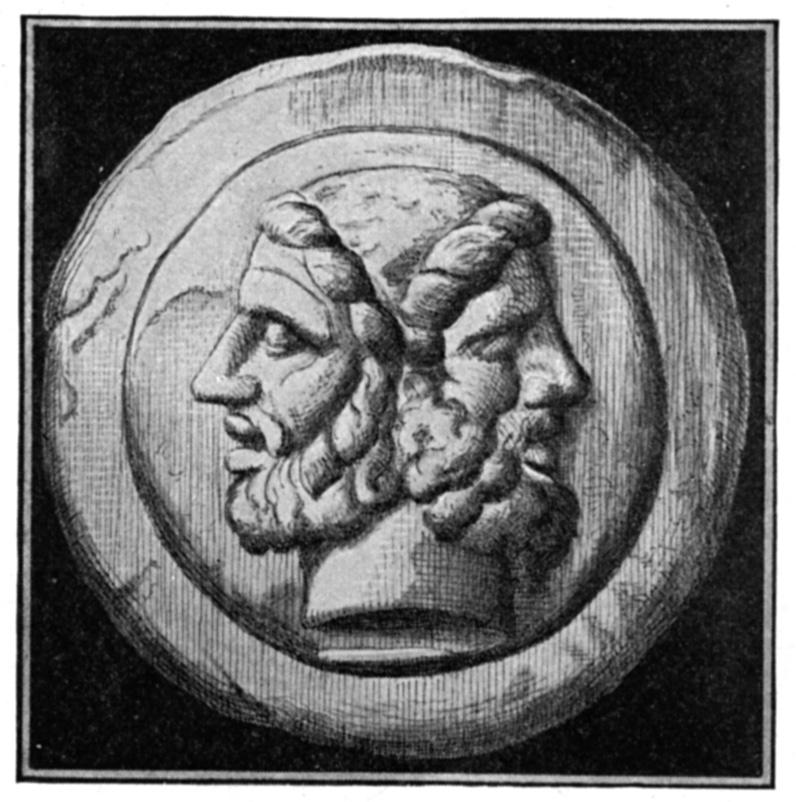
You're too bloody two faced, Janus


2010 - My virtual life grew in 2010. Decent broadband helped. Finances and being at home moved me away from newspapers and into getting most of my news online. Don't know if I'm better or worse informed.
Main sources are friends links on Facebook, thejournal.ie and the irishtimes.com site. All pretty good and the push factor from friends makes up somewhat for the danger of only reading the news you search for which is one of the dangers of the internet.