.
Showing posts with label Books 2011. Show all posts

Tuesday, 3 January 2012

Books of the Year

Books Read 2011


Books of the Year

I discovered one thing when trying to work up this post - I like lists but not making them. Books are hard to compare, they all have different ambitions and suit different moods. They are not the same in memory as they are while being read.
And this year I've been lucky. I've read a lot of good, even great books. I could easily have come up with a top fifty (from eighty five) and all of the books would have earned their place.
But there is only one way to make a list and that's to stop thinking and do it. And so I did. Apologies to all the books that should be in this list but aren't. It doesn't mean I don't love you!
Here's an irreducible top ten (there's fifteen) and if I think for longer the list will grow. They are in no particular order.

Monday, 2 January 2012

Men

Charles Roger Hargreaves


Men by Charles Roger Hargreaves

We are the hollow men
We are the stuffed men
Leaning together
Headpiece filled with straw. Alas!
Our dried voices, when
We whisper together
Are quiet and meaningless
As wind in dry grass
Or rats’ feet over broken glass
In our dry cellar
T.S. Eliot (from The Hollow Men)

Given that my resolution for 2012 is to read one of the twentieth centuries greatest novel sequences (À la Recherche du Temps Perdu) it seemed appropriate to end this year by reading another institution of twentieth century writing Roger Hargreaves' roman fleuve encompassing men in all their varieties, shapes, appetites and weaknesses.

I decided to finish my 100 book challenge by reading fifteen volumes and I came away having become blissfully lost once again the colourful world contained in these pages. Some volumes express the mundanity of the quotidian life while others soar into the realms of fantasy.

Here we find Meneer Doodsbenauwd repeating "This is the End" and Unser Herr Unmöglich challenging the basis of physics. These old friends have stood up to many rereads in the past and I am glad to report that they still do. Mr. Barus' meeting with the Giant still provokes a change in character that at first seems impossible but there is nothing impossible in this world. When Herra Fyndinn discovers how to make animals laugh I laughed along, aware yet of the fragility of our understanding of the natural world.

As Senhor Saltitão puts on his heavy boots I felt the weight of history, the armies marching to the Somme, the collapse of the domestic under the weight of the military. Bay Akýllý has to face the fact again and again that being the brightest of his generation is not enough to throw light into every corner. Some questions have no answers. Fætter Dagdrøm shows us how the unfettered imagination can overcome the walls of any prison. Anarchy reigns incarnate. Chinese whispers in his own mind leave Monsieur Étourdi a poor sort of Pegasus, his messages mixed and all the more thought provoking for that.

Sunday, 1 January 2012

The God of Small Things


The God of Small Things - Arundhati Roy


The God of Small Things is a rich sprawling family saga focussing on the effect of the 'love laws' on one family. It gives an insight into life and politics in Kerala and is filled with rich, vivid descriptions and verbal inventiveness.

Rahel and Estha are twins, Rahel female and Estha male. They are not identical ("two egg twins") and have the usual complement of fingers and toes but, we are told, they have only one soul between them.  "Rahel has a memory of waking up one night giggling at Estha's funny dream."

Saturday, 31 December 2011

Coming Through Slaughter


Coming Through Slaughter - Michael Ondaatje

This is an incantation, a hallucination, an excavation. Melody and noise, beauty and disharmony, whisper and squawk do battle across the page. This is a poets novel, words weighted for their impact, the pulse of rhythm, short passages alternating with long, images that stop you dead with their own gravitational fields.

Buddy Bolden was one of the originators of jazz. "He was the first to play the hard jazz and blues for dancing. Had a good band. Strictly ear band. Later on Armstrong, Bunk Johnson, Freddie Keppard - they all knew he began the good jazz." But, like many such originators Bolden fell as low as he had previously ridden high.

As well as his music he published a scandal rag and was a conduit for the gossip he picked up cutting hair - "the details of the children and the ladies changing hands like coins or a cigarette travelling at mouth level around the room. All these contests for bodies with children in the background like furniture."

Friday, 30 December 2011

The Hour of the Star


The Hour of the Star - Clarice Lispector

"In a street in Rio de Janeiro I caught a glimpse of perdition on the face of a girl from the North-east."

What makes fiction? How is it born? This book starts with a prolonged series of musings from the (fictional) author on the nature of the story he is writing, and how it came to him.

Riddley Walker

Riddley Walker - Russell Walker

This is a ghost story, and we the readers are the ghosts.

When I heard that Russell Hoban has died, I felt that I had to do something to mark his passing. My nom de plume on readers site Shelfari is Riddley, a name lifted from this book. It is probably the book that has left the greatest impression on me over a lifetime of reading, and rereading it feels like going home.

So we are ghosts, and now Russell is a ghost. But why is this book so special?

Wednesday, 28 December 2011

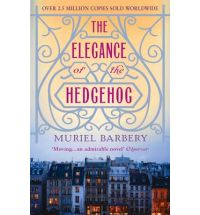
The Elegance of the Hedgehog


The Elegance of the Hedgehog - Muriel Barbery

There is a tacit admission of the weakness of this book in my edition. The book consists of alternate chapters in the voice of the Concierge of an Paris apartment block (Renée, 54) and the young daughter of one of the wealthy families who live there ( Paloma ,12). The chapters are differentiated by typeface. I feel that this is in part because neither voice is convincing, nor really differentiated by anything other than subject matter. Whether this is a fault of author or translator is undiagnosable by me.

Both characters are self diagnosed intellectuals who think profound thoughts and rush to dazzle us with their profundity. At times it is as if philosophy Professor Barbery has opened the window of her apartment on a stormy Paris and the wind has mixed pages of  sophomore essays she was marking with the pages of her novel. I thought I was reading a satire on bourgeois thought who's bite would soon become obvious but unfortunately I wasn't. There are also a few chapters from a Mills and Boon novel mixed through this for good measure.

Sunday, 18 December 2011

The Safety Net


The Safety Net - Heinrich Böll

This is an exactingly written novel, dissecting the exercise of power by the industrial and political elite, by outsiders and finally, by money itself. The church and the aristocracy have lost their place as the ruling classes. Priests are "caught in the sex trap that for centuries they had been setting for others." The aristocracy are gone to seed - "Holger Count Tolm, the last of the name, who for many years now had been disporting himself with women and gambling somewhere in southern Spain, trying without success to be accepted by the international playboy set: the very image of an embarrassing type of decay which, in its unashamedness, was still more to his liking than the decay of the clergy behind carefully preserved façades."

Saturday, 17 December 2011

Adjunct: an Undigest

Adjunct: an Undigest - Peter Manson


This is undoubtedly the most strikingly original book I have read this year. Giving Gysin's / Burrough's cut up techniques a spin through a random number generator this is a collage of found phrases, beer, slices of (low)life, deaths, John Cage, grammar, The Fall, whisky, the difficulty of publishing poetry while on the dole etc.

Manson has a killer's surname and an eye for killer phrases. I wonder if he feels The Fall returned to form in the 21st century? Does he still have boils behind his ears? This is like Lucky Jim for poètes maudits.

Friday, 16 December 2011

Brave New World

Brave New World - Aldous Huxley


This is one of those books I seemed destined not to read for no particular reason. I went through a Huxley phase many years ago but left out some of the most famous books (This, The Doors of Perception, Eyeless in Gaza)  for some reason best known to my preconditioned subconscious. Part of the reason was probably the sense that I'd read it, so often did I see it referenced or hear and read discussions of its merits. All this, luckily, was a long time ago and I was able to read it without too much baggage.

In fact, I found it different to my expectations. I had for some reason, an idea that it would be drier that it is. It is easy to see its huge influence on science fiction, even for a dilettante like me. Exiles on Asperus, a John Wyndham story I reviewed earlier this year, takes the idea of extreme behavioural modification but has an alien race use these modifications on humans. A Clockwork Orange asks a similar question. What of the individual human is it worth giving up for the sake of the 'hive'?

Tuesday, 13 December 2011

A Short History of Tractors in Ukrainian


A Short History of Tractors in Ukrainian - Marina Lewycka

Masking and unmasking is at the very heart of comedy. Things aren't what we think they are, or are they? Nadezhda, our narrator, is the daughter of aged widower and tractor enthusiast Nikolai. She has been estranged from her older sister Vera since her mother's death, and they were not too close before that. She has ambivalent feelings towards her father, her mother was really the heart of the family. She sees herself as a feminist and a socialist; but is she?

When her 84 year old father becomes embroiled with the 36 year old Ukrainian divorcee Valentina her worldview is challenged. Although her father spins a tale of idealism, wanting to help a fellow Ukrainian escape from the mess the Ukraine has become, his interest in her 'superior breasts' seems just as strong as his idealism. Will this woman simply exploit her father? Is her father to exploit this woman?

Sunday, 11 December 2011

Tarr


Tarr - Wyndham Lewis

"The ‘‘ Real Thing” is always Nothing. REALITY is the nearest conscious and safe place to “ Reality.” Once an Artist gets caught in that machinery, he is soon cut in half--literally so." from BLAST, the magazine of Vorticism which Wyndham Lewis played a key role in.

Wyndham Lewis was a key member of the modernist avant garde in the early decades of the twentieth century. As the founder of  Vorticism, an art movement the philosophy of which was outlined in BLAST, he had a influence beyond his own work. BLAST, of which there were only two issues still managed to publish TS Eliot, the story which formed the basis of Ford Madox Ford's classic The Good Soldier, Ezra Pound, paintings from Lewis and Edward Wadsworth and Jacob Epstein etc

Saturday, 3 December 2011

Ironweed


Ironweed - William Kennedy

Here is a romance of loss and despair. Winter light captured in a greasy wine bottle sparkles like the Hope Diamond; shattered lives form and reform like a million sparrows in an autumn sunset, freed from time by the red eyed gaze of  dead companions and adversaries. And through the cracks in broken pavements, abandoned baseball diamonds, grave rectangles of final repose and hobo jungles sprout weeds of unseasonal vigour fertilised by guilt and love; wine and memory.

Francis and Helen bound by weeds of iron, and poor doomed Rudy carrying his own end like a secret he couldn't keep, "the etiquette, the taboos, the protocol of bums," the non existent "brotherhood of the desolate."

Thursday, 1 December 2011

Old School


Old School - Tobias Wolff

There are not many better books about writing than this. The narrator  goes to a boarding school where writing is taken very seriously. During his final year Robert Frost, Ayn Rand and Ernest Hemmingway all accept invitations to visit the school for readings. The final year students compete for a one on one meeting by submitting some of their own writing. The narrator is one of the " boys who aced their English classes and submitted work to the school lit mag and hung around with other book-drunk boys." He is one of the editorial team on the school's literary magazine Troubadour.

The book is about truth and lies, loyalty and betrayal and much else besides. It is both wise and funny. It is unusual in Wolff's canon in that it is a novel that covers the period between his two memoirs, This Boy's Life and In Pharoah's Army. Indeed towards the end of  This Boy's Life Wolff tells us how he faked supporting letters from his teachers to help him get a scholarship to the exclusive Hill School.

Tuesday, 29 November 2011

The Monkey's Raincoat


The Monkey's Raincoat - Robert Crais

Hollywood; sentences with the ends bitten off, sharply; drugs; sleazy producers; desperate actresses; vietnam vets; coffee drinking cops; swimming pools; marble floors; mafiosi; broken fists; broken ribs; broken worse than that; bad jokes; tai chai; yoga; rye bread; kidnapping; women balanced for hair colour and race; studio lots; dead fish and a particularly large Eskimo.

These are only a few of the ingredients in the first Elvis Cole novel and the debt to the master chef of such cuisine, Elmore Leonard, is acknowledged. Elvis reads some of his books, over and over.

Sunday, 27 November 2011

The Garden Party


The Garden Party - Katherine Mansfield

Taking my cue from the 1001 Books group on Shelfari I am counting this short story as a book as it is included on the LIST. I am limping towards 400 and reckon I will finish all 1001 if I live to 1001. This post contains SPOILERS so you should jump to this link and read the story first. It's short.

This collection of stories was the last Mansfield published before her early death and death haunts the title story. The preparations for a garden party in a big country house are interrupted by news of the accidental death of a man from the labourer's cottages not far from the gates of the estate.  Virginia Woolf may well have had it in mind when writing Mrs Dalloway.

Saturday, 26 November 2011

My Cousin Rachel


My Cousin Rachel - Daphne Du Maurier

My Cousin Rachel's opening, with a dead body swinging on a gibbet, reminded me somewhat of Great Expectations. That the narrator is also an orphan called Philip cemented the connection. In some ways you can look at it as a version of Great Expectations PULPed and reconstituted. It is also unmistakably from the same hand as Rebecca, using a similar structure and setting.

Philip, aged seven (one year older than Pip when he meets Magwitch) has been taken to see the hanged man by his cousin and guardian Ambrose, who feels that it will teach him a lesson. (Let's not go into whether this is an appropriate teaching method for seven year olds. Du Maurier's supposedly inappropriate relationship with her father finds an echo here.)  The body as thing is difficult for Philip to accept but when the connection is made to a person he knew this becomes even more so. "I wished he had not named the man. Up to that moment the body had been a dead thing, without identity. It would come into my dreams, lifeless and horrible. I knew that very well from the first instant I had set my eyes upon the gibbet. Now it would have connexion with reality..." The difference between judging someone you don't know and someone you do will play a major part in the novel.

Wednesday, 23 November 2011

The Book of Disquiet


The Book of Disquiet - Fernando Pessoa

Like a miniaturist drawing the most intricate maps of the universe Pessoa uses a tiny canvas to open huge vistas. The trains of thought seem to circle in on themselves but then you suddenly realise he has just been erasing all your preconceptions in preparation for a startlingly original phrase or idea. I didn't find this an easy read and found myself re reading far more than usual but I also found it rewarding. At once strange and familiar, Pessoa's world is one of paradoxes, both apparent and real.

The book was written over a number of years and assembled after Pessoa's death. It is an arrangement of some of the writings he left behind. There are pointers within the text to show that Pessoa had envisaged posthumous readers and didn't intend a direct narrative of any kind. "Through these deliberately unconnected impressions I am the indifferent narrator of my autobiography without events, of my history without a life." These are "the pages which, when put together, will make up my book of random impressions."

Thursday, 17 November 2011

Leon Blum Before His Judges


Léon Blum Before His Judges 
at the Supreme Court of Riom
March 11th and 12th, 1942

I came across this book in a job lot of (largely) history books I bought at auction.  It and some others intrigued me because they were published during the Second World War and told a story of a battleground without guns. It showed how people were politically engaged with the shape their future would take while war was still ongoing.

This is a transcript of the 'trial' for treason of Léon Blum, who was twice head of the French government in the years running up to the outbreak of the war. Ironically, the Vichy government, at the behest of their Nazi masters, were trying him for treason in undermining the production of arms in the run up to the war and contributing to the French defeat. Blum was a lifelong advocate of pacifism and socialism and had overseen the introduction of new labour laws enshrining the idea of the 40 hour week and holiday pay in legislation he had passed as well as nationalising some of the armaments industry.

Tuesday, 15 November 2011

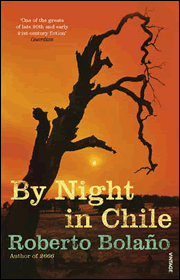
By Night in Chile


By Night in Chile - Roberto Bolaño

The titular night is the night during which the priest Father Sebastian Urrutia narrates his feverish memoirs; it is also the darkness that passed over Chile under Pinochet; it also refers to the nightime activities of the Chilean literati and other dark times.

Right from the start Fr Urrutia introduces one of the novels main themes. Urrita immediately follows his declaration of Chilean nationality by letting us know that "My ancestors on my fathers side came from the Basque country, or Euskadi, as it is now called. On my mother's side I hail from the gentle land of France." Throughout the book, he will refer to people of native Chilean descent as 'ugly', while he himself is "noble" looking, a hint that he may not be much of a Chilean.